

 Image Source
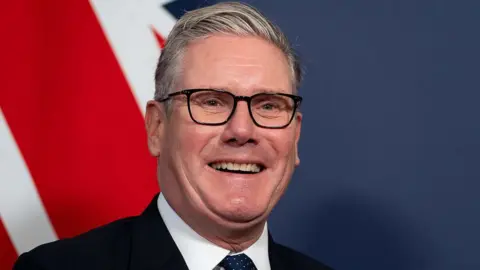
The Leader's very notable shift on the UK's following Brexit ties to the bloc this weekend was crafted to communicate to business, to European institutions, and to other European capitals, alongside his party members.
An Altered Approach for Engagement
Tighter following Brexit trade links are now expected to be looked at as within an regular schedule of bilateral talks as opposed to solely at the current year's structured evaluation of the trade and cooperation agreement.
This constituted the stated position to parliamentary pressure regarding a wider-ranging Brexit reset that suggested rejoining the EU customs bloc.
Political Pressure
Several MPs, union leaders and government figures have joined calls to ideas formalised by parliamentary moves last year that led to a non-binding vote.
"We are better focusing on the EU's internal market instead of the customs union for our closer integration," the leader remarked.
He gave a clear answer that returning to the tariff union was a lower priority, as it undermines what he considers a major accomplishment of the past year: the securing of best-in-class deals with the United States and the Indian subcontinent, with further in the pipeline in the Middle East.
Prioritising the Single Market
In place of the customs union, his focus is on forging a "more integrated partnership" with the internal market, which would avoid ripping up those new trade deals elsewhere.
When the UK formally left the EU in the start of 2021, the agreement at the time prioritised liberation from EU standards over frictionless trade for British exporters in EU nations.
The current reset envisages harmonising with EU standards in specific fields to promote the smoother movement of trade: agri-food goods, energy, and carbon trading.
Industry Requests
A major business group last month published a detailed set of further requests in various industries to aid exporters navigate post-Brexit red tape that has hampered the export of products.
Its internal research found that a large proportion of business members agreed that the existing agreement was not helping commercial success.
A range of additional sectors could, feasibly, see a parallel method – alignment with single market rules – in return for lowering post-Brexit barriers across manufacturing, in automotive, chemicals, or for example in arrangements for VAT.
EU Reaction
European capitals were underwhelmed by the modest aims in last year's reset, specifically the London's refusal of suggestions floated by some experts regarding the virtual readmission of UK products to the internal market.
The specific detail on power sharing and agri-food rules is still to be agreed. A initiative for UK manufacturers to be involved in a €150bn security initiative has stalled over the size of the membership fee, after opposition from the French government. a non-EU country has signed up to the programme.
Broader Context
The UK has concluded arrangements to participate once more in a university exchange programme and to further negotiate a youth jobs scheme. This has helped clear the way for further UK-EU talks.
Some UK insiders say that the issuing of a Washington policy paper has shifted the context on UK ties to the EU.
The document said that the US would "encourage pushback" to continental trends and commended the "growing influence" of patriotic European parties.
Within the administration, there is a growing awareness that the global landscape has evolved further.
Political Considerations
On the national stage, the governing party also foresees being outflanked on EU relations by one opposition party, but additionally another, which is focusing on its traditional heartlands in May's elections.
The Leader's recent words are the product of a confluence of business needs, domestic pressures and geopolitics as the UK embarks upon a year that will commemorate the 10th anniversary of the landmark EU vote.


